
I have spent years seeing players rush through account creation without understanding what happens behind the scenes incaspincasino.de.com. The authentication page and registration sequence at a site like Incaspin Casino are not just entry points. Such are engineered systems that equilibrate speed, legal compliance, and personal data protection. I wish to walk you through exactly how these tools operate so you may navigate them with confidence.
The Structure of a Registration Form
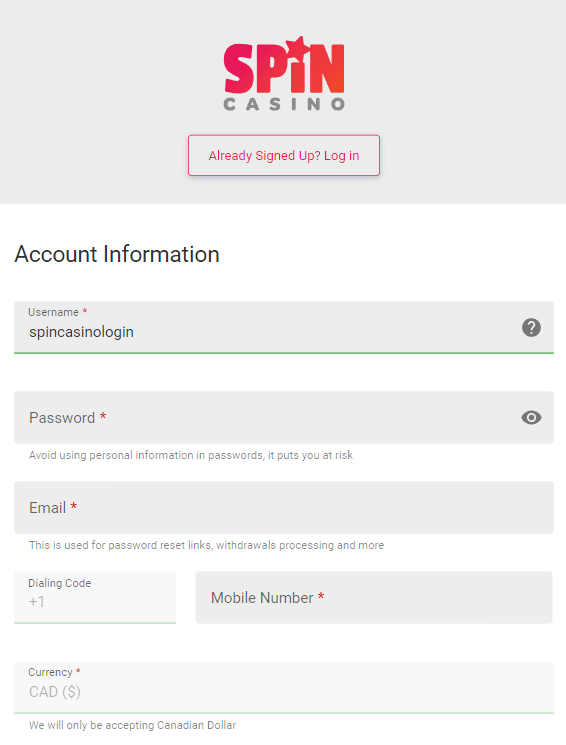
When I first arrive at a sign-up page, I see a sequence of fields that look simple superficially. That simplicity is deliberate. Every entry field I encounter has been designed to reduce friction while capturing essential identity markers. The form usually asks for my full legal name, a valid email address, a secure password, and my date of birth. These four elements make up the foundational identity record.
Behind the scenes, the system instantly runs validation scripts. If I enter incorrectly my email format or set up a password that is too short, the inline error message appears before I even click submit. Real-time feedback prevents me from submitting junk data. The platform cross-references my IP address against my chosen currency to highlight any immediate geographical discrepancies that could cause payment issues later.
I also observe that the password strength meter is not just a visual gimmick. It scrutinizes for entropy, dictionary words, and breached password databases. If I try using a compromised password, the system blocks it silently on the server side. This protects my account from credential-stuffing attacks even before the account is created. The registration tool is my first shield against future intrusion.
Session Tracking and Outlier Detection
After I authenticate, the account tools do not stop working. A background risk engine continuously analyzes my session behavior. It builds a baseline of my typical device, geographic location, screen resolution, and even typing cadence. If a login suddenly stems from a different continent with a different operating system, the engine assigns a risk score to that session.
When the risk score surpasses a predefined threshold, the system activates a silent challenge. I might be asked to re-enter my password or complete a two-factor push notification. If I do not pass the challenge, the session terminates and the account undergoes a temporary lockdown. Simultaneously, I receive an email alert about the suspicious activity. This real-time interception often blocks account takeover attempts before any funds move.
I also notice that the platform monitors in-session transaction patterns. A sudden spike in deposit frequency or an attempt to modify the registered email address mid-session flags immediate flags. The tool applies cooling-off periods for sensitive profile modifications. Even if a hijacker bypasses the login gate, the internal monitoring establishes a hostile environment for fraudulent actions, affording time for the real owner to act.
Two-Factor Authentication as a Trust Layer
Activating two-factor authentication converts my login routine into a multi-factor verification process. After I enter the correct password, the platform requests a second proof of identity. Commonly, this is a temporal one-time password produced by an authenticator app on my phone. The algorithm syncs a shared secret during the initial setup, and then my device generates codes that change every thirty seconds.
I understand that the secret key is saved locally on my device, not on a remote SMS server. SMS-based codes are vulnerable to SIM-swapping attacks. Authenticator apps detach the second factor from my phone number. Even if an attacker captures my password through a keylogger, they cannot log in without physical possession of my unlocked device. The mathematical synchronization between my app and the server is airtight.
Backup codes are the backup plan I must keep offline. The platform generates a set of single-use recovery tokens during setup. Each code can replace the authenticator exactly once. I record these codes and keep them in a physical safe. If I lose my phone while traveling, I can still reach my account without calling support. The system uses each used code immediately, preventing replay attacks.
Know Your Customer Authentication and Record Management
When I arrive at the withdrawal phase, the account tools shift from identity verification to regulatory compliance. Know Your Customer protocols mandate me to provide government-issued identification, proof of address, and sometimes a selfie with the document. The upload widget supports encrypted file transfers directly to a segregated compliance server. My sensitive documents do not mingle with general gaming data.
Optical character recognition software captures my name, date of birth, and document number automatically. The system contrasts these extracted fields against my registration data. A mismatch initiates a manual review queue. If everything matches, the tool screens the document against global sanction lists and politically exposed person databases. This screening happens in seconds, but it fulfills anti-money laundering obligations that keep the platform legally operational.
I consider the liveness detection step particularly clever. When I take the verification selfie, the tool examines micro-expressions and depth mapping to confirm I am a genuine person holding the document, not a static photo held in front of the camera. The software checks for inconsistent lighting, edge artifacts, and screen moiré patterns. This stops bad actors from bypassing identity checks with printed photos or digital displays.
The inner workings of the login gateway
When I return to the login page and provide my credentials, I am initiating a challenge-response protocol. The password I type is never transmitted as plain text. It gets encrypted client-side or encrypted via TLS before the server compares it against the stored hash. The system does not see my password in readable form. It only recognizes whether the mathematical transformation of my input aligns with the stored transformation.
Rate limiting is the unseen protector here. If I enter incorrectly my password five times in rapid succession, the endpoint initiates delaying responses exponentially. This algorithmic throttling frustrates brute-force bots that attempt thousands of combinations per second. For me, a legitimate user, a short lockout timer simply pushes me to use the password reset tool. The login gateway distinguishes human rhythm from machine aggression.
I also benefit from session token generation. Upon successful authentication, the server creates a JSON Web Token or a session cookie with a unique identifier. My browser stores this token and sends it with every subsequent request. The server validates the token’s signature and expiry without re-querying the full credentials. This stateless verification ensures my gameplay smooth while upholding strict access control.
How Email Verification Seals the Identity Loop
Once I complete the form, the system does not trust me right away. I receive an automated email containing a unique, time-sensitive token. This token is generally a cryptographic hash associated with my pending account record. The second I click that link, the server carries out a match operation that switches my account status from unverified to active in the database.
I realize that this step accomplishes multiple purposes simultaneously. It proves I control the email address I gave, which is critical for password recovery. It also functions as a bot deterrent. Automated scripts have difficulty to scan inboxes and click unique links within a narrow expiration window. If I ignore the email, the incomplete registration record gets removed automatically after a set period, maintaining the user database clean.
The verification link also triggers a background security log. The platform captures the exact timestamp, browser fingerprint, and IP address of the verification event. If I later allege my account was hijacked, the support team can match the original verification fingerprint against the suspicious login attempt. This chain of custody makes social engineering attacks significantly harder to execute successfully.
Account Retrieval and Login Reinstatement Tools
losing my password does not mean losing my account. The reset flow dispatches a reset link to my authenticated email address. This link holds a signed token that terminates quickly. When I click it, the platform asks me to set a new password but also re-verifies my browser environment. If the reset request came from an unrecognized device, additional identity challenges appear before the reset completes.
I understand that the recovery tool must prevent enumeration attacks. If I type an email that does not exist in the database, the system still displays a generic success message. It does not reveal whether the account is real. stern.de This blocks attackers from building a list of registered users by checking emails against the recovery form. The confirmation ambiguity is a deliberate privacy guard.
For severe cases where I lose access to my email as well, the account restoration process advances to the compliance team. I must submit my original identification documents and answer security questions based on my historical activity. The support staff matches my new submission against the KYC records on file. This manual process is intentionally deliberate to prevent social engineering, but it ensures that the true owner eventually reclaims control.
